

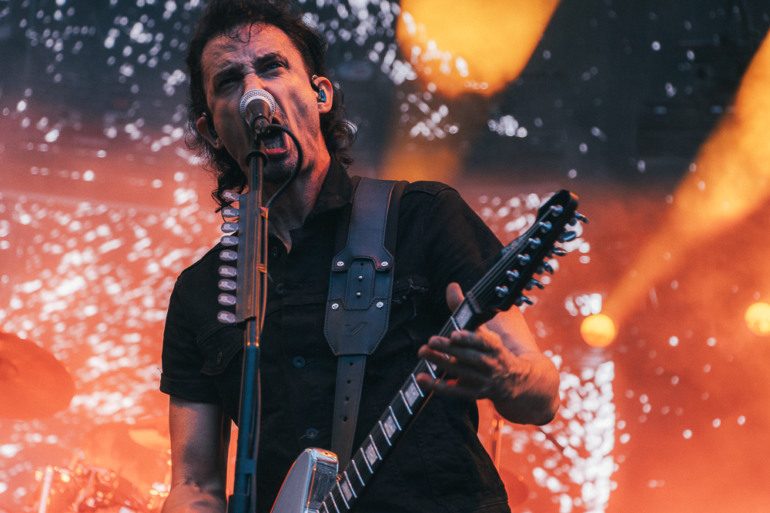
Integrating tribal rhythms and ancient instruments with modern groove metal has earned Mawiza recognition from the Chilean Grammys and respected elders like Mercyful Fate, Slipknot and Mastodon. But on their upcoming third album, these modern day Mapuche warriors are fighting to restore our balance with nature.
Today, Mawiza has released “Ti Inan Paw-Pawkan” as the third and final advanced single off ÜL. Though drawn from a place of deep sorrow, this earthshaking lament echoes the resilience of the band’s ancestral land by taking up the fight alongside Mapuche tribespeople and Joe Duplantier from Olympian performers and Grammy winners Gojira.
“This song is a lament for indigenous people who are living in the city, far away from the land”, Mawiza says. “But it’s also a wake up call. Underneath the city, even when crushed by concrete, nature is always fighting to come out”.
As they recently showcased onstage at Rock al Parque, Mawiza are a rising force on the international metal scene. But “Ti Inan Paw-Pawkan” harkens back to a lost moment in time. In English, the band’s latest offering translates to “The Last Harp Call.” A mouth harp opens the ceremonial proceedings, humming like a chorus of tree frogs, though this peculiar metallic instrument was chosen out of necessity.
“Ti Inan Paw-Pawkan” is the darkest and saddest of the nine chants on ÜL, but in closing the album, the song stands as a final warning call. “Yafülüwkülen mapu kutxan mew (All that is born, will fall and rot),“Awka shouts over a steady rumble of double bass. Like the dancing kollong who protects the Mapocho River in the song’s video, drummer Txalkan serves as a guiding force. His booming kultrun and rattle of cascahuillas run through the entire album like a whitewater rapid.
Photo Credit: Colin Hancock
