
 Isabella Bergamini June 22nd, 2025 - 11:10 PM
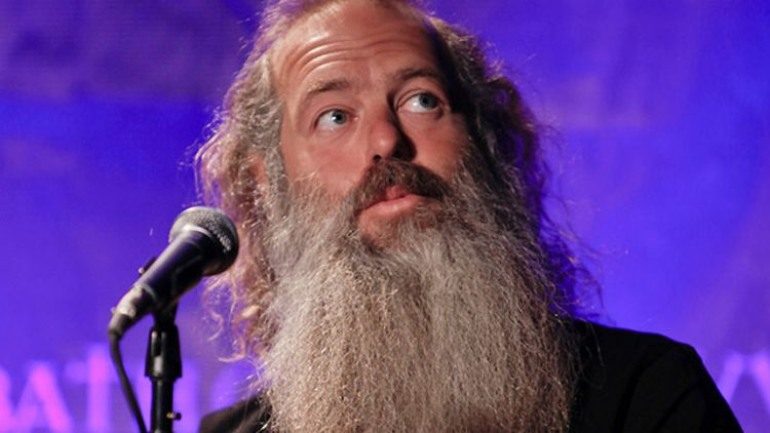
Rick Rubin, the producer who has worked with a variety of artists including Beastie Boys, Lady Gaga and Metallica has published a new book titled The Way of Code: The Timeless Art of Vibe Coding. The piece is a collection of short-form poems with accompanying ‘art pieces’ below each poem. The piece is an interactive book created with the AI chatbot Claude which allows users to modify each ‘art piece’ with AI by giving it an instruction. Rubin’s intention is to give users the opportunity to create their own pieces while also aligning them with each short poem. The poems focus on the topic of AI and take inspiration from an ancient text titled Tao Te Ching. In Rubin’s words, the interactive piece is a “3,000 year-old wisdom teaching combined with cutting-edge technology.”
According to the Consequence, Rubin discussed the piece during his recent appearance on The Ben & Marc Show, a podcast hosted by venture capitalists, Ben Horowitz and Marc Andreessen. There, Rubin talked about how he was introduced to the concept of ‘vibe coding’ through online memes about the subject using his face. Vibe coding refers to when someone uses AI models to generate code based on non-code instructions instead of writing the code by oneself and doing it line-by-line. Vibe coding has received plenty of criticism with many software developers complaining that it can only be used for small projects, but does not have the capacity for large projects. It also creates a disconnect between the programmer and the code, causing some developers to feel as though they are foreign to the languages the AI chatbot is writing in.
Still, Rubin insists that vibe coding is the future by drawing connections between vibe coding and punk rock. In the podcast, Rubin stated, “So in the past, for music, you had to go to the conservatory and study for years and years. Then someday, you could play in a symphony. And then, when punk rock came along, you could maybe learn three chords in a day- and there were all these bands. That made it for everybody.” He continued, “How I started in music was punk rock. If you had something to say, you could say it. You didn’t need the expertise or skill set, other than your idea and your ability to convey it. And vibe coding is the same thing – it’s the punk rock of coding.” Rubin does not believe that AI will replace creatives and instead argues that it will make the lives of creatives easier by emphasizing the ideas rather than the techniques. However, Rubin does contradict himself when he discusses the different uses of AI, stating, “We need some examples of the different things it can do. Now we’ll see it can make animation that looks like your favorite cartoon, and then you see a million people doing that. That’s one idea. I want to see all the things it could do to understand what’s possible.” His description of AI casually imitating the animation of classic cartoons implies the replacement of creatives since that animation was crafted by animators who also count as creatives. While Rubin’s The Way of Code is an interesting experiment, his message is contradictory in its hopes for maintaining the sacredness of creatives.
