
 Claire Yancey December 31st, 2025 - 12:00 PM
An experience that demands patience and attention.
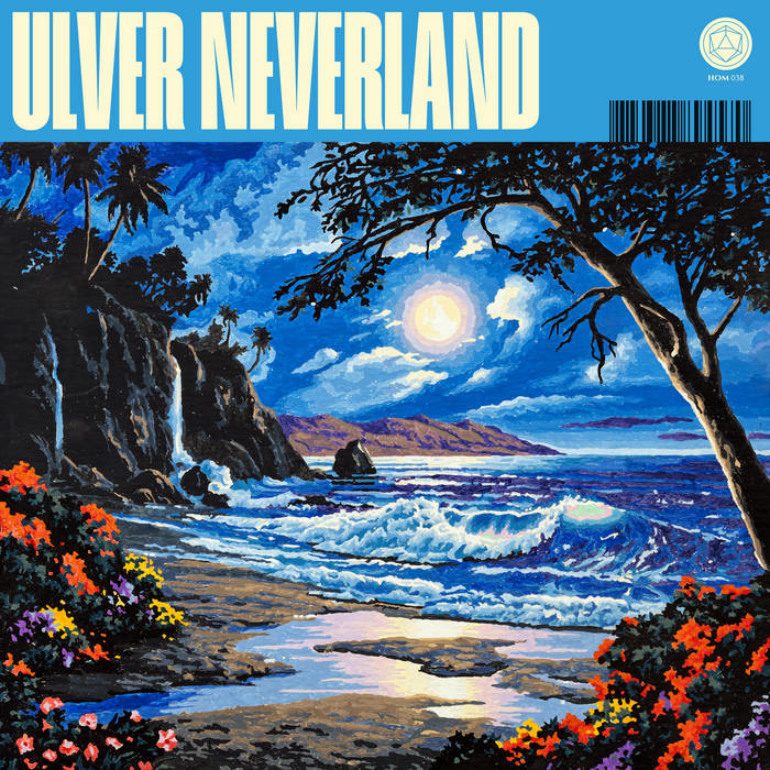
Ulver, the Norwegian experimental electronica band, releases their fourteenth studio album, Neverland, at the very end of this year. The album is brilliantly innovative while still feeling nostalgic at times, calling back to their earlier work with a distinct ’90s electronica influence.
The album opens with “Fear in a Handful of Dust,” immediately immersing the listener in a calm, lulling natural soundscape. Birds chirp, leaves rustle, crickets hum, animals call out in the distance, and water drips and flows through unseen streams. These organic sounds surround light, airy instrumental layers that feel almost weightless. Eventually, a powerful spoken voice enters, cutting through the tranquility. This moment feels intentional, like the calm before the storm, and the words spoken offer a glimpse into the themes the album is about to explore. The track slowly evolves, moving from nature into harsher textures, eventually giving way to the crackling and rustling sounds of fire.
One of the album’s strongest qualities is how seamlessly the songs flow into one another. Each track feels like a continuation of the last, creating a sense of narrative and continuity that pulls the listener deeper into the experience rather than breaking it into separate moments.
“Elephant Trunk” follows with elegant piano melodies that gradually become more passionate and dramatic. As the track progresses, drums slowly emerge, building tension in a way that feels incredibly deliberate. The burn of the first half of the album is extremely gradual, but that slow progression is what makes it so effective. Eventually, bass and distortion creep in beneath the piano, signaling a shift as the listener slips further into darker territory. The distortion grows louder and more mechanical, morphing through different pitches and patterns. Drums intensify, and the layers begin to merge into a single, overwhelming force of sound.
“Weeping Stone” is the first track that feels fully immersive, as if the album has moved past its introduction and into its core. Unidentifiable animal-like calls echo throughout the track, adding an eerie, otherworldly quality. The atmosphere feels cinematic, almost like something pulled from a show such as Stranger Things. Every sound feels symbolic, representing something just out of reach. UFO-like tones spiral increasingly out of control until a distant, barely audible voice appears. It feels as though it is calling out through wind and space, hidden behind layers of sound. The result is deeply haunting.
“People of the Hills” picks up the pace with steadier, more upbeat drums and dense noise textures. Another distorted vocal element appears that is clearly human yet fragmented beyond recognition. It skips and glitches like a scratched CD, making the words impossible to decipher. This approach to vocals is used sparingly throughout the album, which makes each appearance feel intentional. Whether it is spoken word, faint chanting or heavily distorted fragments, the human voice always feels ghostly and obscured.
“Pandora’s Box” leans fully into its unsettling nature. The sounds are alien and deeply uncomfortable, raising the question of what exactly this album is narrating. There is a constant sense of unease, as if something unknown is unfolding just beneath the surface.
“Welcome to the Jungle” introduces a slightly nostalgic, ’90s, sci fi inspired feel. The UFO-like synth tones and textures are reminiscent of that era, giving the track a retro-futuristic quality that stands out while still fitting seamlessly into the album’s larger atmosphere. It feels like a subtle timestamp, grounding the track in a specific sonic era while continuing the album’s overarching sense of mystery.
Neverland is not an album meant to be casually consumed. It is an experience that demands patience and attention. The record feels less like a traditional album and more like a film score, already building scenes, tension and atmosphere without the need for a visual counterpart. Even with minimal use of vocals, there is a clear sense of narrative progression, as if each track represents a different chapter in an unfolding story.
