
 Katy Mayfield April 15th, 2025 - 1:39 PM
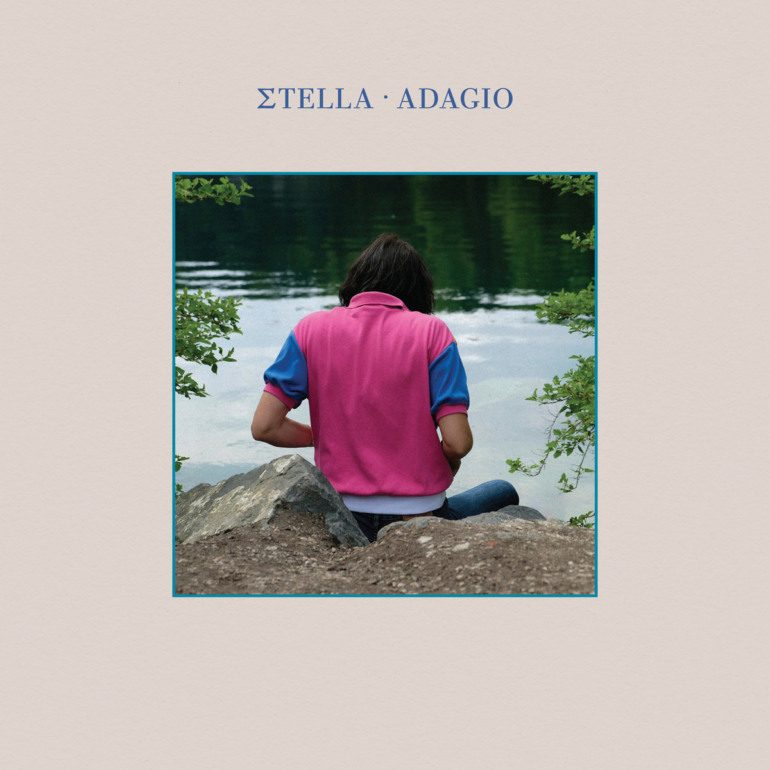
Greek pop ambassador Σtella’s fifth LP is unobjectionable but unmemorable.
Athens, Greece-based singer-songwriter Σtella (pronounced Stella) released Adagio this month, her fifth full-length and her second on the illustrious Sub Pop imprint.
Like another cultural touchstone of the spring, Adagio shoots for the profound but lands in “vacation vibes.” Stella Chronopolou has long adored and sought to emulate the Greek folk-pop artists she grew up with, including on this album, which she characterizes as “a 27-minute meditation on love and desire, rest, and time.”
That… it is not. Listeners will be forgiven for zoning out for its duration, coming away lyrically emptyhanded. When they do lock in, they’ll hear rote platitudes: “can I say I really miss you? What I wouldn’t give to kiss you,” “I was lost ‘till you came and swept my heart away,” “can you please come back, I feel so sad.”
In a meta moment, on “Too Poor,” Σtella sings “my words are too poor to describe-” — apt — before dropping the thread in favor of an instrumental wash. It’s surely not intended as a reflection on the songwriting across the album, but cannily reads as one. Funnily, the intended play with content and form — lyrics drop into instrumentals when Σtella announces their incapability — the sultry bassline, and that accidental wink make the track the most interesting point on the record.
Otherwise, Σtella’s production, too, is unremarkable. It’s pleasant, Euro-beachy. But never more. Σtella leans the weight of the record on a clave and a synth, which are brought out to do their little dance once again on each successive track. Supposedly, it is a meditation on love, but the record never feels particularly strongly in any direction. Each song sways along pleasantly, as if motivated by nothing more than gravity, like a hula dancer toy on a dashboard or white people placidly swaying and nodding, but never dancing, at an adult contemporary concert. It feels low amplitude; that is to say, it never reaches high or low, constrained to ride the same shallow wave over and over, looking quite like a flat line.
Now, Adagio is not odious in the slightest. It softly smiles and affably cedes attention to whatever more interesting is happening around it: making a summertime morning espresso, scoring a film character’s drive down ancient cobblestone streets; whatever thoughts happen to cross a mind. In other words, it’s background music.
