

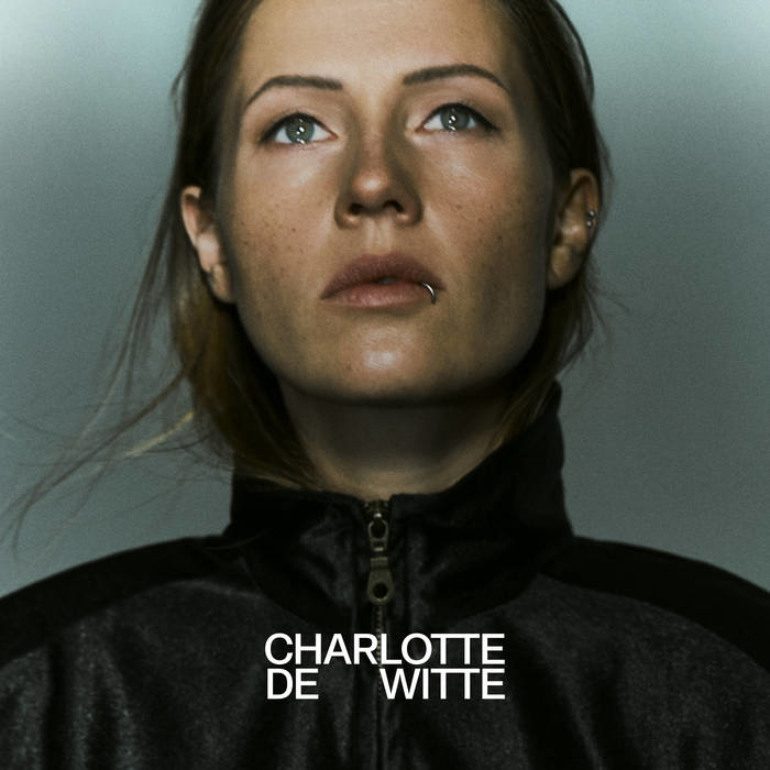
A statement of identity and a step forward.
When you talk about modern techno, Charlotte de Witte is one of the first names that comes up, and for good reason. Charlotte de Witte’s self-titled album marks a clear evolution from her earlier EPs, which were defined by raw, stripped-back techno built on pounding kicks, acid lines and long stretches of tension. In her early releases, especially the work she put out right after dropping the Raving George alias, her sound was intentionally minimal and relentless, almost single-minded in its focus on dark club energy. Over time, she grew more confident in layering texture and atmosphere without losing intensity. Her mixes became more muscular, the tempos edged higher and her interest in acid and industrial tones became more pronounced. The new album feels like the culmination of that growth: still heavy, still hypnotic, but more dynamic and emotionally grounded. Instead of delivering a series of club weapons, she shapes a full narrative, with tracks that breathe, build and intentionally shift mood. It’s her most personal and deliberately crafted project, showing not only how she has refined her technical style but also how she understands her identity as both a DJ and producer in a deeper, more expressive way.
Thematically, the album reads like an honest reflection on her identity as a DJ and clubgoer. She has described it as a tribute to the culture that shaped her, and the sequencing reinforces that intention. Instead of offering isolated club weapons, she curates a journey that mirrors the emotional arc of a long, immersive set. Some peaks feel explosive and cathartic, valleys that sink into shadowy ambience and transitions that carry the listener with purpose. The production itself is more nuanced than in her earlier work. Acid lines twist and unravel in more complex ways, percussion is layered with precision and the low-end is engineered to feel both physical and atmospheric. At the same time, she lets vulnerability come through, especially in tracks where vocals or melodic fragments soften the otherwise heavy framework.
In the opening track, “The Realm,” the title could not be more fitting. From the very first moments, the album constructs a world of its own, pulling the listener into an immersive space that feels like a realm of release and liberation. Even though the record leans into darker textures, those tones take on a euphoric, almost transcendent quality that makes the heaviness feel uplifting rather than oppressive. One of the standout tracks, “Vidmahe,” showcases this balance especially well. Its production is dense and forceful, driven by a deep, thumping bass and layers of glitchy, electric details that seem to spark and dance inside your mind, creating a sensation that is both intense and mesmerizing.
Overall, the album represents a moment of maturity for de Witte. It honors her roots, but also shows her willingness to expand the boundaries of her sound. By shaping a cohesive narrative instead of focusing solely on club-focused singles, she positions herself not just as a dominant figure in techno, but as an artist capable of building full worlds. The self-titled project feels like both a statement of identity and a step forward, proving how she can maintain her intensity while exploring richer emotional terrain.
