

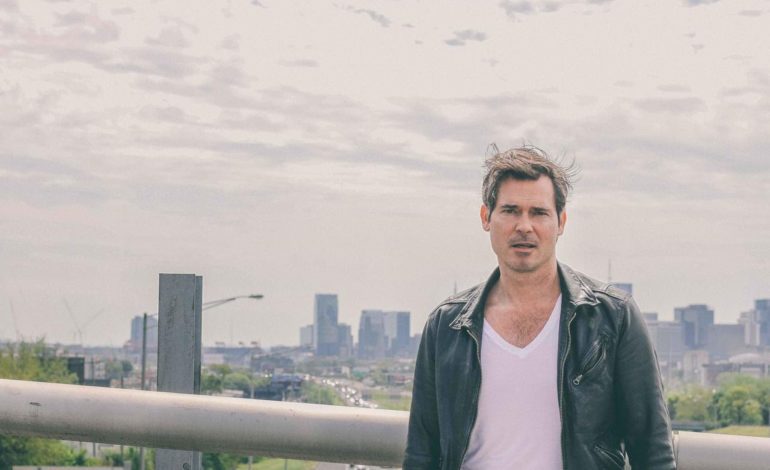
mxdwn: Hi, my name is Eve Pierpont and I’m the editor for mxdwn’s music features section. I’m here today with Ketch Secor from Old Crow Medicine Show. Hi, Ketch.
Ketch Secor: Howdy. How are you?
mxdwn: Good, how are you?
KS: Well, I’m doing great. I get to talk to you all about music, so what’s up?
mxdwn: Oh, exactly. In 2025, you released your first incredibly raw solo album, Story the Crow Told Me. It had to be an emotional journey to look back on all the memories, realizations and sacrifices you wrote about in it. How did that sort of cathartic release shape you as an artist and a person?
KS: Oh, well, thanks for asking. You know, I guess you start looking in the rearview mirror enough, and you start thinking you might have some unresolved things you’ve gotta go check out and address. So the record is kind of a time-traveling device to go back to being about 20. The record starts at when I’m about 15, and it follows me and my band as we find our way in this really precarious lifestyle associated with the music that we’re making. You know, we’re kind of living the music, and it’s a really fast-paced and kind of hard lifestyle, at least for me. I mean, a lot of people do dangerous stuff in their 20s, but this was sort of like, up a peg, and it was also a little bit like reenacting an earlier habit of musicians, you know, in the ‘20s and ‘40s, and just sort of going real hard. So, I guess that led me to wonder, was it worth it, and how did it all happen? And, you know, there are some traumas with it. Anyhow, I decided just to turn it all into music and do some storytelling. I had a really good time telling these stories that are all really rich and fun, and I felt so much lighter about the experience after I made the record. I wasn’t worried anymore about the, you know, I didn’t wince as I looked in the rearview mirror anymore. So, job well done.
mxdwn: Yeah, that’s interesting and good. So, what was it like to get back into your band writing headspace after Story the Crow Told Me?
KS: Oh, well, you know, I’m always kind of writing. I write a lot with Molly Tuttle, who’s my fiancee, whose past couple of records we’ve written entirely, and then I wrote a Christmas record, and I had this kids’ record I was writing for that I hadn’t made yet, then somebody said, well, you guys ought to make a record for the semiquincentennial, which is the 250th birthday of the US, and so that got me thinking about a whole other kind of rationale. I already kind of wrote a lot of songs that, the album is full of a combination of songs I wrote a while ago and songs that I just wrote. But you know, I’m always making music, and all the traveling that I do affords me a pretty rare glimpse of what’s going on out here in the old US of A. I’ve seen it for the past 28 years as a traveler too. So, I’ve seen towns change, this sort of undulating kind of thing you might see in Google Earth, that’s what my life’s been like, this sort of in and out, and every time I come in for a closer look, it’s different. So, I feel this unique bird’s-eye perspective of America because I’ve traveled it so much and I’ve kind of been embedded in so many cultures, which the music that I make commands me to go find and understand.
mxdwn: Yeah, definitely. I would say it reflects really well in your music. I feel like, not even just the lyrics, but somehow in the actual melodies you capture America and the fact that you traveled and experienced a lot of things really well. So, how do you think the band profited from having longtime bass player Morgan Jahnig as the producer?
KS: Oh, well, Morgan has always been a kind of producer-type of person anyway. You know, he’s in our band and has been for 27 years, or a really long time, and we’ve been thick as thieves. Me and him do a lot of work together. When you love somebody and you work really close with him like I do with Morgan, sometimes it’s hard to realize that some other outcomes could come of it. You sort of get in your tracks with people. But when I said to Morgan, why don’t you produce the record and PJ plays bass? He said that sounded great and it made a real difference. Having somebody who understands Old Crow really well, also in this era in which records are just as expensive as they used to be to make, but don’t pay anything like they used to. I mean, when I was a kid, records didn’t pay anything either, you know? Because you made ’em in your bedroom or in your garage. Then I turned about 20, and then records cost about $2,000 to make. Well, then I turned about 30 and records cost… you know, I don’t know, I’m not good at math, but I’m trying to think of how many times 2,000 is a in 100,000, maybe 500 times that, something crazy, right? But those records paid. You’d get a big advance, and our band came up in the era when records, CDs, were a really, really big item. You made a lot of money on selling this physical thing. So now that that’s not happening anymore, it makes a lot less sense to spend money on making these records. So, one of the great things about Morgan, I mean, we paid Morgan of course, but it’s more about how instead of getting some fancy outside producer who was gonna charge us thousands of dollars, we just got Morgan. And then PJ, who normally plays accordion or mandolin or banjo, now he’s on bass. Helps to have a band full of multi-instrumentalists too.
mxdwn: Yeah, no, I’m sure, it sounds like it. I always wish that CDs were still a thing. I don’t know why, but I like actually buying something like a physical piece. Whenever I can buy a vinyl of an album that I love, because I have a record player, I’ll always buy a vinyl. But CD players, people don’t really have them anymore, like in cars. My old car used to have a CD player, and I’d like to buy CDs for that when I didn’t have my phone or something. But now cars don’t even have CD players anymore. But I don’t know, I always love that physical aspect, being able to hold its tangible music, I guess, in a sense.
KS: And it makes you a lot more likely to not skip around. You know, I might listen to one song by one artist and then it’s just a changing appetite, so what do today’s hit makers do. Well, we read the tea leaves. You know, when I started out, I played on street corners, right? I played on a lot of curbs. And one of the things playing on the curb taught me was how to read the sidewalk. You know, I could see a rich person coming down, like, three blocks away, like I had a nose for it. I’d be like, boys, let’s get a good tune going, because I want her to feel like the minute she rounds that corner, bang, you know, you owe us $16, madam.
mxdwn: Exactly! That’s a good skill to acquire. So, like you kind of said, Union Made is a reflection upon the people, places and stories of a country on the cusp of its 250th birthday. How did you ensure the album sonically embodied the idea of speaking to the joys, potentials, the right, and the wrongs of where we are today, where we’re going and what can embolden us to have a more perfect union in the future?
KS: Well, sonically, it’s the instrumentation that you use. Like, if you play fiddles, drums, mandolins and banjos, they definitely sound like America. You know? I mean, not everything that I do sounds like throwback like that. But, at least the way that we channeled the record, and then the other things, just the songs, I guess. I mean, they’re all about places, people and institutions. There’s a couple of songs that are really historical songs, rooted in a true story or one character. Like, there’s a song about Meriwether Lewis, and I wrote that song thinking, well, there aren’t any songs about Lewis and Clark. But Lewis and Clark are kind of my most important, remember that unit that you get to in about fifth grade when you learn about explorers?
mxdwn: Yes.
KS: Yeah. Well, I feel like I’m living in that unit. Like, I didn’t really get that fired up about anything after the explorers’ unit in the fifth grade. It’s just been like an ever-flowing cup. My cup runneth over with excitement about people who traveled to new places. Like the discovery of New Zealand by Maori paddlers, or the boat people who came from Saigon and then were brought to Biloxi, Mississippi, this wonderful Vietnamese community down on the Gulf Coast. I just love stories about people who have migrated and moved to go stake their claim. I feel like as a musician, every time I make a record, it’s like setting up a cairn stone on a long journey, you know, like Chimney Rock. When you got to Chimney Rock, which I think is maybe somewhere in western Nebraska, the pioneering people there would carve their name into the rock during the buggy and wagon days. I feel like making a record is like scribbling your name on the side of a mountain before you move on.
mxdwn: Yes, that’s a good way of putting it. So, you co-wrote “My Side of the Mountain” with your fiancée Molly Tuttle and Luke Combs, and have Del and Ronnie McCoury featured on it. What was that whole experience of creating and recording that song like for you?
KS: Well, it was really different writing with such a huge country singer like Luke. He was making a bluegrass record but for some reason just didn’t get around to executing this record. So, the songs that we wrote for it, it had been five years, so it just felt like fair game. We didn’t quite finish “My Side of the Mountain” because we were writing a lot and everything was sort of quick. So Molly and I got back together, put the good spin on it, polished it up, and took it to the guys and started recording it. And then Del McCoury agreed to come out and sing on it. Del is 87 now, and he is just like the most wonderful, grandfatherly type of patriarch of bluegrass music. I didn’t get to know Bill Monroe or Roy Acuff or other people that are so instrumental in the music that we make. But I’ve spent all kinds of nights following Del McCoury’s bus and meeting Del’s family for coffee and a biscuit. They’re just such wonderful people. So I just loved having him and his son Ronnie on this record. Thanks for asking.
mxdwn: Awesome. Yeah, of course. “Last American Waltz” really resonates with me. I think it may be one of my favorite songs on the album. Can you tell me about your creative process behind the song and what it means to you?
KS: There was this old guy that used to come see us play a long time ago, and he always had a weird walking stick. He was this really large, Western-y sort of cowboy-Indian composite sketch of a drifter, right? This guy, I think his name was Omar, and I don’t know, he was from Wyoming and he just seemed, one year Omar was probably at 65 to 80 of the shows we put on. He was always there, and I talked to him a couple of times, but he didn’t really seem to want anything from me, you know? He wasn’t there to like, get his picture made, or tell me all about his kids or nothing. He never shared much with me. So, one day I decided I’d write him a song, and that’s what this tune is.
mxdwn: Aw, that’s beautiful. Like your highly literary approach to songwriting, Evan Felker is known for his vivid storytelling lyrics and is featured on “Revolution Now.” Now, I know Lee Oskar is the co-writer for the song, but did that similarity play any role in your decision to share the song vocally with him?
KS: Well, I just love Evan and Turnpike Troubadours so much. They’re my kindred brothers of the road. You know, we’re on different tracks of our lives, but in many ways, we’re doing the same work together. And I feel that, in general, about most of my music community; we’re all in this together. Even though the music business is really highly competitive and it would have you compete with anybody, your peers, it’s really not that way. We’re all trying to live this way because we’re called to do it. And so, I just love this particular band from Oklahoma. I got to visit with him a lot last year, not so much this year, but we made this record together. So, last year we had a song that he and I wrote on their record, and I just really wanted to keep paying it forward so that there would always be something of catching Evan. Even though it’s just always gonna be a side hustle for us, one of these days I sure would love to break out of our bands and do something together. This song was written based on a musical sketch that Lee Oskar sent me. And Lee Oskar is one of my oldest heroes in the music world. He’s just this incredible harmonica player, songwriter and performer, but he also started this incredible harmonica company that is such an American tale. He was born in another land, in Denmark, the child of Holocaust survivors. He comes to this country in the 1950s without a word of English, and he builds up the premier harmonica company in the world up in Seattle. It’s an amazing story, and he’s just such a mensch. Love that guy.
mxdwn: Yeah, no, that is an incredible story. So, the lyrics, “Preacher, politician, businessman/ all the powers in your hands to let a stranger in/ have you set a place at the table for a neighbor/ who is not your kin and doesn’t share the creed you believe in” in “Beautiful Land,” those lyrics are very powerful. Can you tell me where that song came from?
KS: Yeah. That song is called “Beautiful Land,” and I wrote it a few years back with my friend Eric Dozier. Eric is a leader in the Baháʼí faith, he’s an elder in the Baháʼí community. A lot of the songs that we wrote together were for kids because we had just worked on this huge project to start a school, and that was my idea, I was the chairman of this nonprofit, and I was starting a school. The school hired Eric to be its musical director and sort of like, you know, the resident cool cat who would be there. And, he’s from this really interesting community of Black Appalachians. We don’t often think of the Appalachians as having Black communities, but they always have and always will. Eric comes from around Soddy-Daisy, which is up around Chattanooga. It’s way up on the mountain and it’s really rural. Sometime after the Civil War, free people went and found, scratched out a living and, here we are 150 years later. Eric and I had a really wonderful bunch of tunes that we wrote together that were, like I said, mainly for kids, and that was the case with “Beautiful Land.” I sort of had to pull it into more of a contemporary type of thing. I’ve been sitting on that one for a while. I kept sending it to my band and they were like, wow, I don’t know what we’re gonna do with this gospel song. But it just became perfect for this project. And then a friend of mine who I’ve been working with for about 10 years now, Maggie Rose, showed up at the studio and sang this beautiful harmony on it, and lead lines, and collaborated with us. So it’s been a kind of a full-circle type of tune, and we’re singing it tonight at the Grand Ole Opry.
mxdwn: Nice. Yeah, I know I saw that you basically just started a tour in May, a six-month tour, so that’s gonna be a while. But yeah, how’s the tour going? Is that part of the tour, or are you just playing?
KS: Yeah, the tour is cool. Last night we were in New York and I had to look at the t-shirt to tell me what’s going on. I often look at the poster or the t-shirt to tell me what’s going on because I’ve been doing this for a while, basically since I was a teenager. Actually, literally, because I started this band when I was 19. I’m getting to that point in my life where it’s just harder. I’ve started losing things on the plane, the bus or the truck stop. I’ve always been a kind of flippant anyway, I’m not good with my possessions. I never learned whatever that aphorism is about holding onto your shit kid, whatever that one is. I think Lincoln’s got one, maybe Ben Franklin. But anyway, I just feel like I’m losing my head right now about all these towns I gotta go to and places., so I just look at the back of the t-shirt and that’ll tell me.
mxdwn: Hmm. I like that. I like that a lot because, yeah, you’re going everywhere, like I saw you play in PA and then going a bunch of other places, coming back to PA, so it’ll be a whirlwind. But I’m sure you’re used to it and make the most of it, make a lot of fun out of it, at least I could tell.
KS: You just gotta stay present in it. If you’re sitting in Spain wishing you were in Peoria, or sitting in Peoria and wishing you were at home in Nashville… I mean, I always want it to stop. I want to get off the rollercoaster. But when I get home, like, here I am home right now, I’m so glad to be home, but I’m only home for a few hours, like less than 18. And then I go on and I’ll pick up another couple of shows. I might be back and then I go again. So it’s really important that you condition yourself to stay present in all the places, because if you don’t think that home is where you find yourself, then there can be a terribly uprooted feeling of living this way.
mxdwn: I’m sure that’s such a good way of putting it. Out of all the impressive collaborations on this album, both vocally and lyrically, who left the most profound impression on you?
KS: What Ray Benson, a great friend, and his band, Asleep at the Wheel, did sure made me feel like Old Crow had an avatar in this weird country music world where they don’t really have bands anymore. Everybody’s a solo artist, everybody’s just a guy’s name. But Ray said, I wanna start a band, strength in numbers, and you know, this is such a gregarious thing we do. We just get together. We’re just like birds on a wire, a uniform body politic. And that’s one of the reasons why it becomes easier to make a record about America than it might be for some other country singer with a hat on, like this, because, you know, out of many, one, it is something that this band does really well. We’re already a collective and we’ve managed to endure for quite a long time, like coming up on three decades of that kind of endurance. So, looking at the states and thinking about the level of discord that we’re seeing right now, the disrespect that we’re so readily able to show our brothers and sisters, seems like sometimes we’re coming apart at the seams. And I’ve been around for as long as I’ve been alive, and I’ve never seen anything like this, this vitriol and mean-spiritedness, so I’m out to hammer that stuff into plowshares. I’m out here to make sure that with all the powers that I have, which are few, that I will show love and consolation to those around me. Because I really believe that we are here to love on each other. That’s kind of the primary function of the human relationship. And music is love, it’s what it is. Whatever the song is, it’s worship, it’s love, it’s spirit turned into a catchy little jingle. And it’s healing too. It’s medicine.
mxdwn: Yeah, so healing. Union Made features two covers, Buffalo Springfield’s “For What It’s Worth” and Merle Haggard’s “Rainbow Stew.” Where did the decision come from to do those two songs specifically?
KS: We picked those out of a hat kind of, you know. We had a big listl and there was a lot of really good stuff because there are so many obvious choices. We could have recorded Irving Berlin’s “God Bless America,” that would have been cool. I just sang that one at Yankee Stadium the other day, it was so great.
mxdwn: Oh, I wish I saw that.
KS: But we didn’t pick “God Bless America” or “This Land Is Your Land,” though those would have been good choices too. Instead, we picked a couple of protest songs, really from two different camps. You have Merle Haggard representing sort of a center-right position in a protest song. Though, it’s really hard to tell what “Rainbow Stew” is about. Like, is it strictly tongue-in-cheek? Merle Haggard is a brilliant man, and he wrote that song during the Reagan years. There’s a lot of country music that’s sort of like that line in, what’s that really annoying song about piña coladas? Do you like Piña Coladas?
mxdwn: Yeah.
KS: When you get to that line, “If you’re not into yoga,” right? Like, that’s the way in the early ’80s people would position themselves against some sort of newfangled modern identity politic thing. So when you look at that and you think, I mean, now you have songs like the really famous one we’ve all scrutinized by Jason Aldean, “Try That in a Small Town,” and you know, you’ll find yourself up the creek, so to speak, or up a tree, frankly, but it’s really the same thing. It’s just that he’s not into yoga. The way you say that now is like with crosshairs. Before they said that stuff, Merle Haggard said it with “Rainbow Stew.” I mean, Merle Haggard’s clearly not that into yoga. Now, he’s also the guy who said, we don’t smoke marijuana in Muskogee, and everybody knows that Merle Haggard smoked plenty of marijuana in Muskogee. So, it’s also a put-on, but most politics are. Unless you’re an elected official, politics are the ultimate put-on. I haven’t yet made full sense of what “Rainbow Stew” is all about. I just know that Merle is imagining a fanciful land where we’ll all be drinking this Bubble Up cola. It also has a weird ’70s bottled beverage reference that is like Sprite, but they don’t make it anymore. There’s a lot to unpack with that song. Thanks for asking. If you get a chance to listen to it, I’d love to hear what you think the song is about. I can’t quite figure it out. The other song is a lot easier to understand. It was written by Stephen Stills. You’re asking about “For What It’s Worth” by Buffalo Springfield. The record came out in 1966, and it’s one of these amazing ballads of the 1960s in which we see, through the song, the hippie putting his or her flower into the barrel of the rifle being held by the National Guard troops at Kent State. We see the chaos of the Chicago Democratic National Convention that year with all the cops and all the hippies. And we see the American Indian Movement up there at Wounded Knee and Alcatraz. You see so many elements of the civil rights movement and the Black Panthers, and you can really see it all in this amazing song. I love this line, “what a field day for the heat.” That one always really hit me because a lot of people listen to that song now and they think about the deportations and the efforts of ICE to arrest people, but also just to create this air of disturbance and the feeling of the state. This is a tactic that Bull Connor used when he brought dogs to Birmingham, Alabama, he was the sheriff of that town. We’ve seen this playbook before in societies around the world where fear is the tactic, this reminder of, hey, if you don’t agree with us, we can make you go away. Well, songs like “For What It’s Worth” by Stephen Stills and Buffalo Springfield, sung for years after that by Crosby, Stills & Nash, these songs stand up in the face of that bully and they say, power to the people. Power to the people. Right on.
mxdwn: Yeah. No, I’ve listened to “For What It’s Worth,” obviously, and I mean, I know that song. I love that song. It is a perfect cover for your album. Merle Haggard’s song, I listened to your version and the original. I did read the lyrics with it, but to tell you what I think about it, I’d have to definitely read the lyrics and listen to it a couple more times. Because as I was reading it, I was like, wow, this is very, very interesting, the lyrics, everything, how it’s written. It also made sense as a cover, but yeah, there is a lot to unpack in that song. You could probably literally write a whole paper on it, like multiple pages, just really dissecting it and coming up with so many different things. But also just out of curiosity, what other cover songs were you thinking of doing?
KS: Oh, we were thinking about singing “The Rising” by Bruce Springsteen. Though, I was a little old for that because it came out at a time when I was so hardcore into old-timey music and early country music that I definitely wasn’t listening to Bruce when the Twin Towers fell. But I was certainly around for that. That happened right when I was living in Nashville in 2001, and I was 23 or something. Seeing the experience of going to war again, which we had done when I was a littler kid with Operation Desert Storm and Desert Shield, that was like 1990 before that, because I was born in ’78, I never really understood why it was this way for me, but I felt really connected to this second wave of the counterculture of the 1960s and the fight between Nixon’s plan and Carter’s plan, the Republicans, the Democrats and the Dixiecrats. And I grew up in the era of Strom Thurmond politics and Jesse, who was this Jesse from North Carolina, God, he was on all the news shows. I’ll think of that in a minute. Anyhow, I guess for me, growing up 10 years after the assassination of Dr. King, well, it’s been 50 years since that happened, I look at these mile markers in American history, and I know that my generation is a part of them. I’ve got kids now, and it’s important for me to make sure that my kids understand this continuum of time here in our country. We are always looking back while we move forward, wondering if we can rectify what happened in the past and renew ourselves in our commitments to building and fostering a fair and balanced American society where people are lifted up, where success is within reach of most, and can we do this in relative harmony. So, I’m still working that out, I guess.
mxdwn: Yeah, exactly. So the band has always walked that fine line of creating profound, socially conscious music and rowdy, good-times songs. Do you think this album fits into that category?
KS: Yeah, I think having a bunch of songs that make you think about the times in America, but don’t necessarily point fingers. I mean, I’m not saying one thing about Trump or nothing about Trump. It’s such a weird time. The world wants you to pick sides, and I just want to pick people I know. It’s like America is a big family reunion. Do I believe everything that my cousin does, my uncle does and my aunts do? No. But am I going to sit there and eat potato salad with them, talk about the weather and know that we’re related? Definitely.
mxdwn: Yeah, I know. It’s so polarizing these days.
KS: So yeah, I think we’re walking the line pretty good of having a record that, just like it says, is a love letter to the U.S. of A. on her 250th birthday. It’s just kind of a love offering. That’s what they asked for in the church, you know? They’re like, hey, who’s got a love offering for us today? And then they pass the plate around. Well, America needs input, just like it did in 1966 when Stephen Stills wrote his great song. Or just like it was when Merle Haggard thought “Rainbow Stew” was going to be the next iconic Merle Haggard hit. We just need to keep adding to the stew pot.
mxdwn: Yeah, definitely. You do it really, really well where, like you said, you’re not mentioning Trump. You talk about politics, but it doesn’t get too political where you’re pointing fingers, so you walk that line beautifully, just so you know. I mean, you probably already know that, but yeah.
KS: Well, thanks.
mxdwn: Of course.
KS: Like, I got a song about the Civil War, and I reference the Civil War a couple of times. I grew up in this real battlefield part of Virginia. Every high school, every girl I ever kissed was named for a Confederate battle general or a battlefield. Every subdivision that we snuck around in, every shopping center, they were all named for the war. The war was everywhere. So, I think rather than talk about discord in the present sense, I’m a songwriter, so I can show you some other discord. When the lady brought her baby to King Solomon and they were trying to figure out whose kid it was, you know what King Solomon said? He said, well, go get a sharp knife and cut the baby down the middle, and you can have this half and she can have that half. Sometimes justice and equality aren’t the same thing.
mxdwn: Yeah, that’s so true. That’s such a good point. So, it’s been 22 years since “Wagon Wheel” was released. How does it feel now to look back at that monumental moment in the band’s history?
KS: Well, I was singing it last night in Queens, and everybody was dancing. It was so fun. I just love the way that the song just belongs to people, you know? All I did was do the writing part, and half of it is stolen anyway. I think it was just sort of dumb luck to stumble into an unclaimed Bob Dylan goldmine and be like, well, talk about staking your claim. I just went up there and just started panning it, and suddenly I struck pay dirt. Now, all these years later, I just feel really rewarded by the fact that there’s a song I had a hand in creating that brought people closer to the Great Spirit that permeates all things, that constitutes all things, that is the channel of life flowing through all things. That’s what you feel when you dance to a song that you know every word to and get your friends real close. Like, that’s what’s happening. It’s an almighty force. Anything that will do that is about looking to the stars and bringing everybody you love with you. So I think it’s quite the rabbit-out-of-the-hat type of magic trick, and I don’t get to do that type of trick in any other way. This is my place to do that trick. I didn’t write anything for Union Made thinking that it was going to pull that trick or anything. That’s probably what I’ll get in this world, and that’s just plain enough for me.
mxdwn: Yeah. Aw, well that’s awesome. That song is a hit. Everybody knows that song. I love that song, but yeah, I just feel like it’s crazy thinking about how long ago that song came out too.
KS: Well, it took a lot of years for people to discover it, and people are still discovering it.
mxdwn: I know, it’s crazy.
KS: And there are people around the world, too, who don’t know it. This Peruvian guy came up to me and he had just heard it for the first time, and he was thrilled about it. He had listened to it eight times since discovering it.
mxdwn: Yeah, oh, I’m sure. It gives that energy to people. It’s magnificent that you could create something like that.
KS: Yeah. Well, like anything good, it’s half borrowed. I mean, we can scribble our name in it, but even the Picassos, what’s really original?
mxdwn: That’s a good question. Some food for thought. But you made it what it is, so that’s all that matters. Without you, it wouldn’t have been the phenomenon that it was.
KS: Yeah. Well, it’s good that the song is there. People needed a new kind of anthem. I didn’t have that song when I was a kid. For me, it was “American Pie” by Don McLean. I’m too young for that song anyway, but I had my parents’ record collection. God, I played that. I mean, I know every word to that song.
mxdwn: No, that’s so true. That is a good one.
KS: God, I heard that song, and it just messed me up. I also felt that way about “Piano Man.” Oh, I just loved “Piano Man.”
mxdwn: Oh yeah, both of those are still phenomenal hit songs.
KS: But they’re both really long story songs, and “Wagon Wheel” just sort of cuts to it. It really consolidates it. There are only three verses, and they’re pretty quick, so the economy of that song is, to me, one of the more impressive things about it.
mxdwn: No, that’s such a good point. I’ve never thought about it like that before, but yeah, that’s so true.
