
 Jasmina Pepic November 28th, 2025 - 4:05 PM
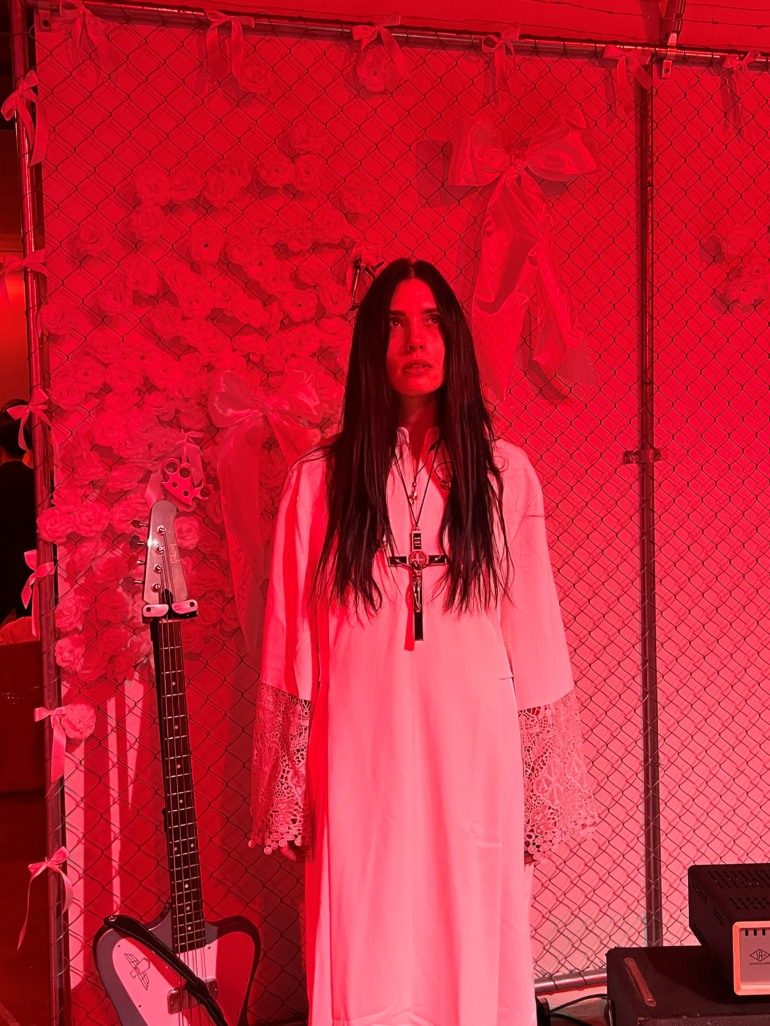
Russian prosecutors are seeking to have the protest art collective Pussy Riot officially designated as an extremist organization. The request arrives during a period of heightened scrutiny toward dissenting groups in Russia. It also coincides with a live performance by Pussy Riot founder Nadya Tolokonnikova inside a prison cell installation at the Museum of Contemporary Art Chicago.
The Russian Ministry of Justice has filed a lawsuit with Moscow’s Tverskoy Court asking that Pussy Riot be recognized as an extremist group and banned across the country. A hearing is scheduled for this December 15th. While individual members of the collective have previously been labeled alleged foreign agents or allegedly connected to criminal or terrorist activity, this marks the first time prosecutors have sought the extremist designation for the organization itself. The case reflects a broader global trend in which governments attempt to categorize dissident movements as extremists or alleged wrongdoers.
The news reached Tolokonnikova while she was in the middle of her durational performance POLICE STATE at MCA Chicago. The installation resembles a Russian prison cell and comments on surveillance and authoritarianism. Tolokonnikova described the timing as surreal and noted the overlap between her art and real events. She reflected on Pussy Riot’s origins, recalling how she and a collaborator envisioned the group as a movement during early planning sessions in Moscow. Fourteen years later, prosecutors are attempting to categorize the collective alongside groups already targeted by the state.
Tolokonnikova criticized the move and rejected the notion that Pussy Riot’s work constitutes extremism. She argued that singing in public spaces and staging street actions do not meet the threshold for extremist behavior. She stated that extremism involves invading countries and allegedly committing war crimes, not creating political art or performing in costume.
Pussy Riot has long been known for performances that challenge political authority in Russia. Tolokonnikova herself was imprisoned in 2012 following an anti-Putin performance in a Moscow church. Her continued work in museums and galleries worldwide has kept the group at the forefront of political art. If the court rules in favor of prosecutors in December, Pussy Riot would face a nationwide ban.
