
 Noelle May Torres November 15th, 2025 - 12:00 PM
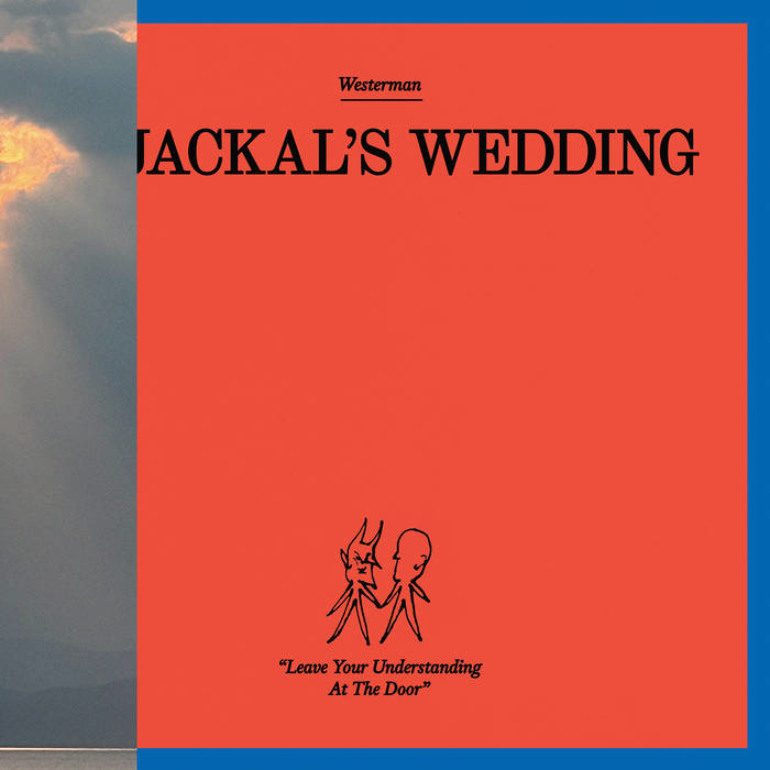
You may now kiss the canid.
Will Westerman, known mononymously by his surname, has brought this latest project to life in the abstract artistic interim. It is the space between. “Jakkals trou met Wolf se vrou” is an Afrikaans idiom describing a sunshower, the fuzzy line between sunshine and storm. Literally, it reads “Jackal is marrying Wolf’s wife,” a union of tricksters. Hence the title of Westerman’s third full-length excursion: A Jackal’s Wedding. At these crossroads, the liminal is king.
The Jackal is to be married. Naturally, “S. Machine” swings the occasion open with twinkling church bells, a brief glimpse of solidity before dissolution. Venusian dissolution, mind you, that accretes into an urgent romance. The narrator declares himself to be “done living life like I′m all chewed up,” in intrepid pursuit of the grander art that is love.
“About Leaving” immediately captivates with its syncopated drums, forthcoming piano chords, soulful vocals and plucky bassline. For that matter, the picked basslines across the entire record are absolutely ablaze with personality and movement.
“Adriatic” combs through the cultural archives, cobbling a piece reminiscent of classic new wave and synthpop. Erasure, Depeche Mode, New Order, hearkened back to in a fresh new context. The experimental nostalgia of it all brings Jack Stauber to mind.
“Mosquito” is a bluesy singer-songwriter saunter in the sun, its lulling musicality contrasted with bright and vivid vocal harmonies. The chasmic, rich, sweeping soundscapes developed by producer Marta Salogni are a perfect match for Westerman’s discerning minimalism. Tracks like “Mosquito” select their few tools with care, giving each and every layer ample room to breathe. The listener is never overwhelmed; only captivated.
“Spring” is a reverberant piano ballad that would turn no heads if included on Coldplay’s A Rush of Blood to the Head. However, it very much deserves to turn heads for its sincerity. That sincerity–in the recording, the lyrics, the performance–saves it from the cliché hell of four-chord pop balladry. Instead, it is an intimate glimpse at an artist in longing. It is tender and harrowing, like the empty air left behind a fleeting dream of joy. “‘Let me in,’ a scream cut through the din,” he sings softly. This is the crossroads. The intersection between a cry and a whisper, a push and a pull, an open heart in a cage. The black-backed jackal and its solar saddle; a wound inflicted by love.
“PSFN” takes a winding path to its coda, which sees the narrator mourn how roads untraveled seem to “Only burn and illuminate.”That line flows like a cold sedative, an intravenous elixir pending oblivion. There’s an inconclusive finality to the track’s remnants; the operation has only just begun, after all.
The guitars on “Nevermind” and “Nature of a Language” dance about like auroras, ionized by their author’s conviction. The strings toward the end of “Agnus Dei” evoke a melancholic sort of retrospect, the sinking sense that it truly is “too late to change it now.” “Weak Hands” speaks its pain with timbres, shivering timbres, that tremble like a time-worn fist. Jackal’s Wedding embodies a simple elegance of storytelling, like a ceramic figurine encased in a snowglobe. Curiously, mournfully, hopefully do we sit and watch the flakes of plastic fall over these sorrows and joys and intermediates. Beautifully spectroscopic, isn’t it?
Closer. “You Are Indelibly Where I Sleep.” No words. Only a slow, amorphous ocean of distortion. A piercing ring. Faint piano embellishments, a lighthouse through miles of fog. Is this the frightening uncertainty of birth, or the frightening closure of death? A mellow bath of light, or a sub-freezing vacuum of darkness? The bloating ache of fullness, or the crushing hollow of emptiness?
Or perhaps… a marriage of the two?
