
 Greg Poblete November 10th, 2025 - 12:00 PM
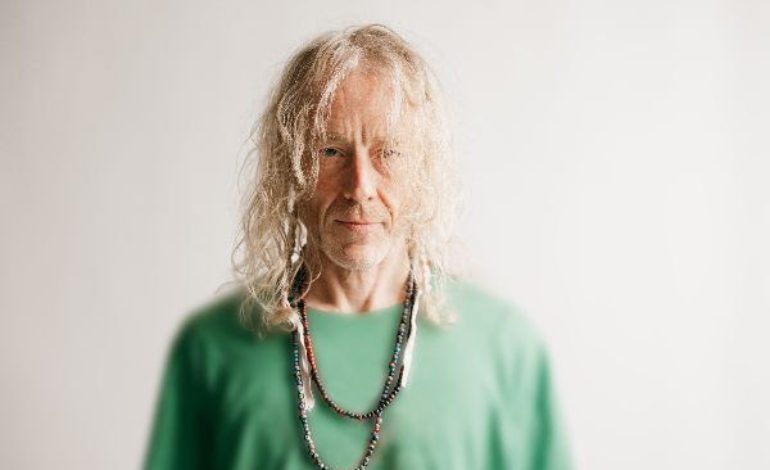
Grief may take the shape of many forms from conversations, reflection, depression or all of the above. But in musician Alan Sparhawk’s case, he leaned into creating art, collaborating with fellow Duluth-natives and bluegrass group, Trampled by Turtles, to channel his pain into a raw, unfiltered exploration of mourning of his late wife and Low bandmate, Mimi Parker. Instead of tiptoeing around the uncomfortable feelings that come with the loss of a loved one, Sparhawk instead ran straight through the messiness and welcomed it with open arms, as if catching up with a long-lost friend.
As he gets ready to head back out on the road for more shows, mxdwn had the opportunity to chat with Sparhawk as well as Trampled by Turtles band member Ryan Young about the new album Alan Sparhawk and Trampled by Turtles, the process of finally working together after so many years, the concept of the afterlife and the importance of music and community during times of grief.
mxdwn: First of all, how are you and where are you currently in the world?
Ryan: I’m currently at home in the Twin Cities in Minnesota, in the United States. The weather’s beautiful today. I got a day off from touring and just hanging out and doing home stuff.
Alan: I’m in Duluth, Minnesota, at home. Getting ready to go to Montreal tomorrow.
mxdwn: Exciting. I know you guys are on a little bit of break from touring. How has the tour been and how has it been being able to play these songs live?
Alan: Well, we’re actually getting ready to do the first me with the Turtles here coming up in a couple of weeks in San Francisco. So the last couple of weeks we’ve got together and rehearsed a bit. I’ve been out on tour kind of throughout the year with my three-piece band, my son on bass and a friend of mine named Eric Pollard on drums. So yeah, we’ve been playing these songs live and it’s been fun. Sometimes the guys from Trampled by Turtles have joined on some of the shows, just individuals, so to speak.
mxdwn: That’s cool. I do want to ask, what was it like working with Trampled by Turtles on this project? And why do you think this was such an important record to work on with them?
Alan: Wow, where do I start? The Turtles are old friends. We’re all from the same town, or at least the Turtles started in Duluth here when we were all a bit younger. So we kind of saw them get going. Turtles came on a tour with Low pretty early on and opened for us. It was kind of their first few gigs outside of the state when they first started, and then fairly quickly after that they became quite big and popular. A lot of times over the years we’ve crossed paths, they would invite us up to sing with them sometimes at shows. And different individuals from the band have played on our records, and we’ve played each other’s songs and stuff like that. It’s kind of a friendship and sort of a setup that’s always there. Like a lot of friends in bands and stuff, the casual mention of, “Hey man, we should do something together sometime or we should record something.” Or, “Hey, we should do that tune together,” or something comes up from time to time and you learn to be patient for when those dreams actually come true.
But yeah, a couple years ago, those guys had me ride along on a few shows that they were doing and that conversation sort of was… Is it broached? Breached? So to speak, whatever the word is for that. It came up again and at the last minute an opportunity came up to join them in the studio where they were working on some other stuff. What started out as just, “Let’s play a couple songs together and see what happens,” it ended up being a really big afternoon. We got five or six songs done in just one afternoon, and made quick plans to do a couple more tunes to finish a record out. It’s not what we set out to do, but work went really easily and quickly, and it just seemed like the right thing to do.
I had worked with them before and I knew how they worked. I don’t know if it’s a regional thing or just an experienced musician thing. But there’s a common attitude there that we have of, let’s just throw something together quick and trust our initial thoughts and initial takes on stuff and roll; try to just make something real. So it was very quick and simple. I was overwhelmed. It was really beautiful and surprising, but it also was not surprising because I knew these guys were really quick and good and had an attitude about making music, and an attitude about what I did. They’re good friends and I knew they would step up and it definitely happened.
mxdwn: That’s beautiful. It sounds like it’s a collaboration that was in the works for a long time. So I’m glad that it finally came to fruition.
Alan: Yeah, me too.
mxdwn: What would you say was the hardest part working with the Turtles? Do you feel like there was a new way that you approached creating music when you worked with them?
Alan: Well, the hardest part for me was at the time we got together recording, I was still pretty thrown back with the loss of my wife. And I had been really struggling for a while with what I was doing. A lot of the old ways of making music and all the old sounds of the way I would approach music were kind of disorienting for me at the time. And I remember being especially anxious about my voice. I just struggled to have perspective on it. I couldn’t tell if what I was doing was any good. I think that was the hardest thing. When I went to go do the vocal takes, I really had to trust the situation and trust the preparation and trust the people we were working with to help me get something respectable down. It’s hard to describe. I couldn’t get a bearing on whether what I was doing was right or good, or whether I was singing very well.
Years of working closely with my partner, Mim, singing, I’d really come to depend on that conversation and that interaction for figuring out if what I was doing was working. And then also just sort of the shock, sort of the disorientation that happens when you lose somebody. So for me, that was the hardest part. The music fell together very naturally and without much conversation at all. But for me, the hardest part was the singing. And then even into mixing the record, I had to put a lot of trust in the people we were working with. Nat Harvey, who mixed the record, I really had to rely on them to help me see what was going on.
mxdwn: It definitely sounds like it was a very cathartic and very healing process for you, and almost a necessity. Like there was no other place to turn but to the music. So you kind of just had to power through whatever you’re making, just trust that it was okay and it was going to get you to where you needed to be.
Alan: Yeah, precisely.
mxdwn: I love that. One of my favorite tracks is “Heaven.” I love the beautiful vocal harmonies. I feel like it’s a track that gives you perspective on the afterlife. Thinking about that, and with the passing of Mim, I know it must be hard and I’m sorry. But has that changed your perspective on what happens when we leave this place?
Alan: Well, it’s a pretty loaded question. Honestly, as a person who more or less grew up in a fairly religious environment. I grew up Mormon, and there’s a very strong and sort of deep conversation in that religion about where we came from and where we’re going, and sort of the purpose of life and the connections that we have with family. So I had that foundation and that was something that had been a strong foundation through my life and it got me through some difficult times and probably enhanced my family and enhanced our relationship with sort of a perspective and something to lean on and gain perspective about harder things through.
Yeah, when you lose someone, it’s really quite a shock. The things that are around us, material things, this desk, this chair, they exist. The material that is there has always existed in one form or another, and you could smash it into toothpicks and into fibers and into dust, and it would still exist essentially. It would continue on through time in some form or another. But a person, when they pass, their presence, their spirit, if you want to call it that, their essence really does disappear and it’s a shock because it really flies in the face of this tangible existence that we have.
So yeah, it’s been pretty difficult to feel the eternal nature of things. I mean, I’m hopeful and I probably tend to want to lean on those things anyway, even if I’m not sure, because I think they bring out the better side of me when I do have hope. But I gotta admit, it definitely shook my faith and shook my perspective and it continues to force me to ask questions. And it continues to puzzle me sometimes and challenge me to open my eyes and see the things that are real and are foundational, things that are good. See the forces in the universe that are actually doing things, whether it’s love or patience or the way time moves. It’s definitely been a new journey with that. Again, I stay hopeful.
There are moments through music that I feel… We can transcend, we can touch and get a sense of something higher and beyond our senses for sure. I’m glad I have that. I’ve been able to play music with my family. My kids are musicians as well. That’s been pretty powerful to continue that connection and that closeness with family.
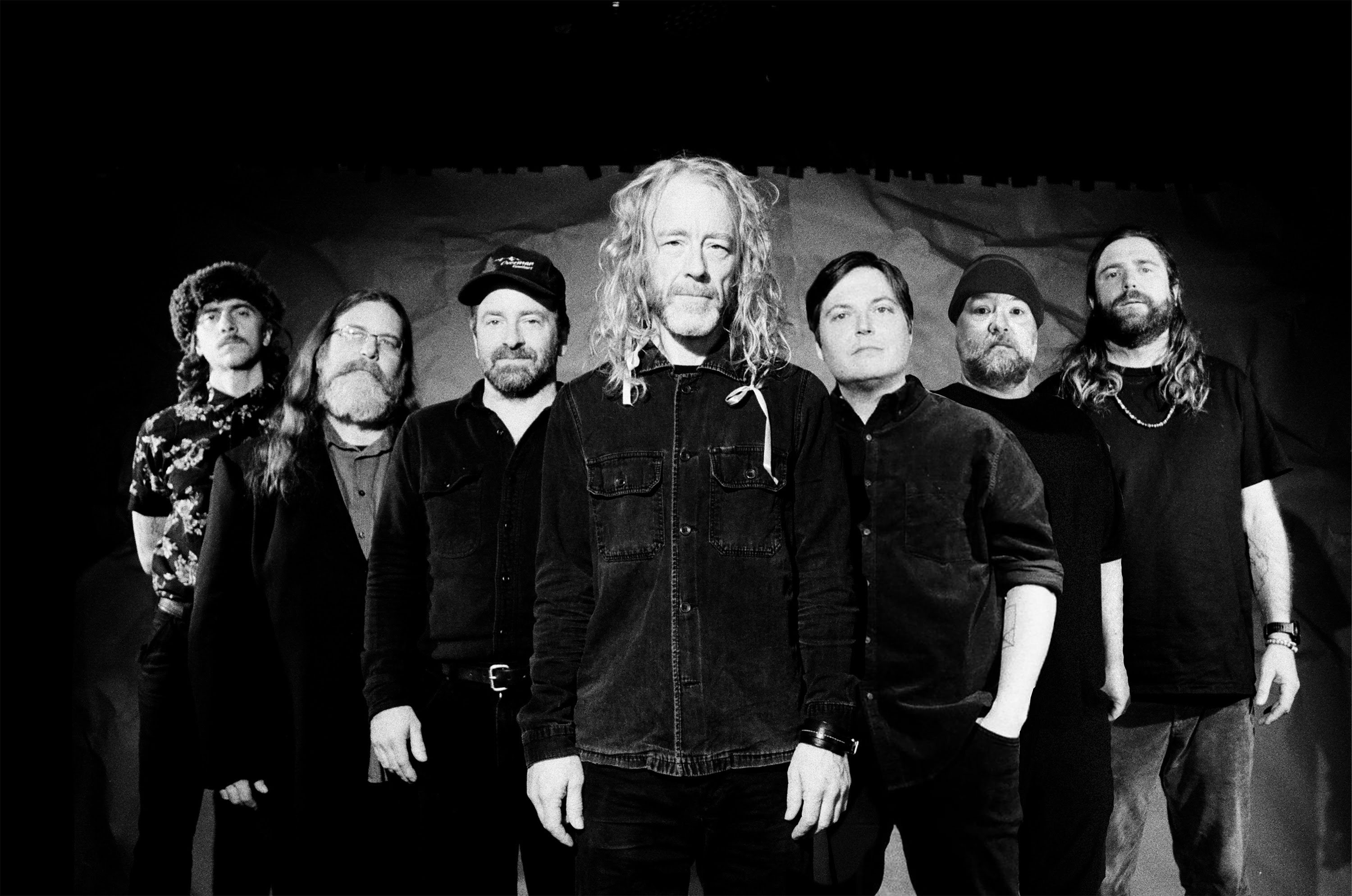
mxdwn: It does sound like even through the music, even with this latest album, her presence is still there. Like she’s still channeling through you and your energy and I think that’s a beautiful thing.
Alan: Thank you. I hope so. I definitely owe her for a lot of what I am able to do and she definitely shaped… Yeah, she for sure continues to be an influence.
mxdwn: Thank you so much for even sharing this. I know it’s a very powerful thing, music. And I think it’s stories like this that really connect humanity together. So I really appreciate it. Another track I really do like is “Screaming Song,” especially the instrumentation of it. I love the angry fiddle solo towards the end. It sounds like it’s in pain. What do you feel like instrumentally, having this raw, bluegrass instrumentation adds to the telling of this album?
Alan: I hope Ryan will jump in here on this question for sure. Putting that song together was very quick. There was a lot of trust. We went into doing that song pretty simply. There was not a lot of talk about it. We showed the guys the structure a little bit and I turned to Ryan and said, “There’s an instrumental moment here. Go ahead and see what you can put together. See what comes to you for this moment.” So near as I can remember, we basically did one take and that’s what Ryan pulled together. You say there’s pain in there. There’s everything there. There’s shock, there’s denial, there’s pain, there’s exhaustion, there’s resignation. Again, ask Ryan about that. I was speechless at the end of the take, for sure.
Ryan: I honestly don’t remember doing it. I don’t remember playing that song. I don’t remember recording it. It does make sense that you said there was one take. I don’t remember trying it again a different way or doing anything like that. It just kind of happened. I got to hear the lyrics before we actually recorded it because Alan so graciously, I loved it. He sent us some demos, so we could hear the chord changes and hear the lyrics and get a sense of what we’re getting into, basically. So I knew what that song was about.
I went through my own version of what Al went through. It’s different, not the same at all, but just a different version of it. So I was able to take his lyrics and relate it to my own situation that I went through and play. I wasn’t playing as if I was Alan necessarily or putting myself in his shoes or anything like that. It just seemed appropriate, I guess. And again, I’ll remind you that I don’t remember doing it. I don’t remember what I was thinking. I’m just coming with an answer.
mxdwn: It was more a subconscious thing. Like your fingers knew what to do?
Ryan: Yeah, the song is called the “Screaming Song,” and you listen to the lyrics, you immediately, if you know the story of Al Sparhawk, you know what the song is about. And it just seemed appropriate. I wasn’t going to play a pretty, Baroque-sounding violin part over that, you know? That wouldn’t have been right.
mxdwn: It came out really beautifully. And the fact that it was one take, that’s very telling of, that was just natural for you to get to that place. Do you feel like when you are creating the instrumentation around Alan’s lyrics, do you have to intentionally see the story first or do you already have like the skeleton of what you’re going to do?
Ryan: I would say each song would be different. I didn’t have a plan or a blueprint that I applied to each song. One really great thing about Trampled by Turtles that I love playing with them is that everybody is such a good listener and excellent musicians. And so is Al. So if Al is playing a certain thing on guitar or singing a certain way or if Dave (Carroll) is playing a certain lick on the banjo, everybody will either make room for that or support it in some way. And it’s lightning quick.
We don’t really rehearse very much and we don’t pre-plan anything. Everybody just listens really, really hard and really well and plays off of everybody. And everybody’s working towards the same goal of making that sound as good as possible. Nobody talks about it, really. Nobody tells anybody else what to do unless there’s exceptions. But for the most part, people just use their ears and brain and don’t use their mouth.
mxdwn: It sounds like it’s kind of an unspoken language, music. You just know exactly what you’re going to say, even without having to say it. One thing I did want to talk about is, it’s kind of a detour, but I love the album artwork. It kind of looks like a hodgepodge of different ancient artifacts. I want to know what’s the story behind it and how does it connect to the songwriting on the album?
Alan: For the artwork, I was kind of puzzling. The record was done and mixed, and the schedule pressure was a little bit odd. People were saying, “Do you have artwork yet?” “Yeah, I’m working on it, I’m working on it.” For me, usually, I open up my eye and keep my eye out for something that hits. I’ve been lucky over the years, usually something will come across my path that as soon as I see it, I know.
I was over walking Superior, which is a town across the harbor in Wisconsin from Duluth. And I walked by a friend of ours’ tattoo shop and this painting was up in the window, just as part of the decoration. It’s kind of the art scene, this tattoo artist friend is also a musician. Jay Whitcomb is an artist from town who I’ve known of, seen his stuff around. And I saw the painting and it just hit me and I thought, “Wow, that looks like the right thing.” I wanted something that kind of reflected… I don’t know. I guess I was looking for something that hinted at the fact that it was more organic music. A little more organic, earthy, acoustic, but also raw.
I’ve always loved visual arts and abstract painting, abstract visuals that sort of ride that edge of reference. There’s something about it, especially the jawbone is a very powerful image. And I don’t know if you can see on there, the painting says “Jesus en larmes” which is French for “Jesus in tears.” Just that phrase to me felt respectful and mournful, but also obscure enough. I didn’t want to call the record that, necessarily. I thought that might be a little too on-the-nose. But yeah, it was just an artist from town and saw the piece and it immediately resonated. I walked in and asked what was up with the painting. Again, it turned out to be this person from town, Jay Whitcomb, who I’d seen stuff before, but I hadn’t seen this painting. I made a couple calls and we were in.
mxdwn: It is a moving piece and I really do love the artwork a lot. I have a couple more and I’ll get you guys going in a little bit. But as you continue your healing journey through art and community and collaboration, what kind of advice would you give to people who are also either in a difficult place or struggling that need some kind of outlet to express themselves in some way?
Alan: One thing I definitely learned is that there’s no advice. There’s no perfect advice you could give anybody who’s going through that. You know, kind words, book recommendations, that kind of stuff is real natural. Everybody reacts to that stuff differently, whether it’s a friend going through something like that. I was the humble recipient of many kindnesses and many kind words. You learn pretty quickly that everybody has a different way of expressing that. Even people who didn’t have anything to say or couldn’t say anything and who maybe had to consciously or subconsciously keep distance from that, you learn quickly to respect that as well. Because there’s really a wide variety of ways that we each deal with those things, and they’re all just as valid as any.
I think the most helpful thing you can do is just spend time with the person, if you can stand it. And that’s kind of part of your nature. Go ahead and spend time with the person or invite them along to something that you’re doing. Sometimes just the very fact of getting out of the house can be really helpful. You don’t need to come up with something. You don’t need to come up with something to say. You don’t need to come up with answers. You don’t need to come up with some miraculous perspective that’s going to help them somehow because there kind of really isn’t. You let people grieve the way they need to.
But getting back to the Turtles, they were pretty gracious and invited me out to ride along on a few shows they were doing. And at the time, I could definitely say I really needed it. I needed to be around music without it being an obligation. I needed to be around people who were just okay doing what they do and letting you be around it and not feel like you’re around people who are under pressure to say something or soothe or help you get through something that really you have to get through. It’s not always feasible and not everybody has the right moment to be able to do that for someone that you love. I would say definitely that spending time with these guys and hearing music and being around music again was pretty helpful. Obviously, it helped me start writing some songs again and helped me finish writing some fragments that had been starting to come out of me at the time and eventually gave me a goal as far as somewhere to put the tunes.
mxdwn: It sounds like you’re going to continue working with the Turtles at least for a little bit longer and it sounds like they’re a good place for you, at least on your healing journey.
Alan: Yeah, man. It doesn’t take that much energy to just be around people, do what you can. You don’t have to push yourself out of your zone.
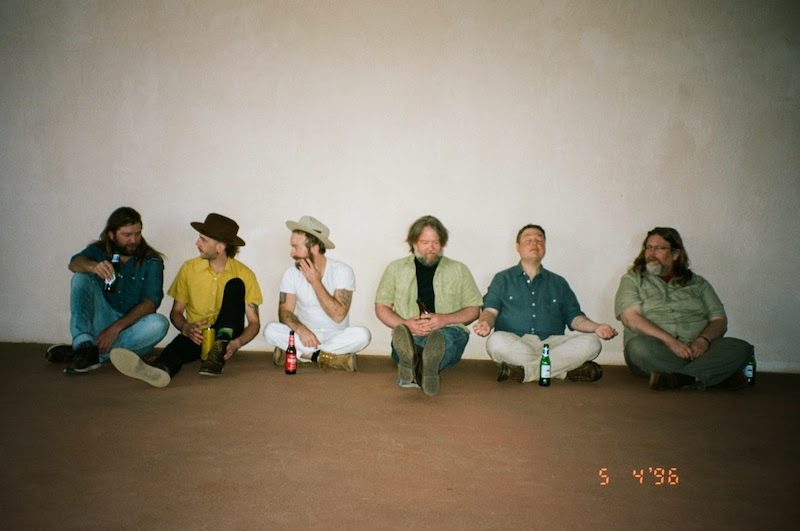
mxdwn: That’s beautiful. That’s all I have for you guys. I do appreciate you talking with me and congrats on the record. It is such a beautiful record and I really just want to say thank you for sharing this with us. Do you have any final words?
Alan: You talked a little bit about how quietly and easily things came together. Ryan talked a little bit about how without much work and without much communication, the right attitude in music, you can just fall in and make space for each other. I think that was a really key thing. I see that with these guys. It’s really about seeing the whole picture and hearing the music and being a little more humble about what your contribution is. Time and time again in the studio and on stage, I’ve seen these guys really transcend and be able to jump into something without much preparation and make really beautiful music that connects with people. I’m grateful. Thank you, Ryan, for being here for this.
Ryan: Yeah, for the Turtles, I think I can speak for them. We all think the world of Alan Sparhawk and Low and Mim, and it’s a complete and total honor to be asked to play on his music. Being fans of his music, to be asked to actually be a part of it is, it still hasn’t even really hit me that that happened. We made a record and it turned out really good. So thank you, Al.
To see upcoming tour dates and other news regarding Alan Sparhawk, check out his website. And make sure to listen to the new album, Alan Sparhawk and Trampled by Turtles available now.
